


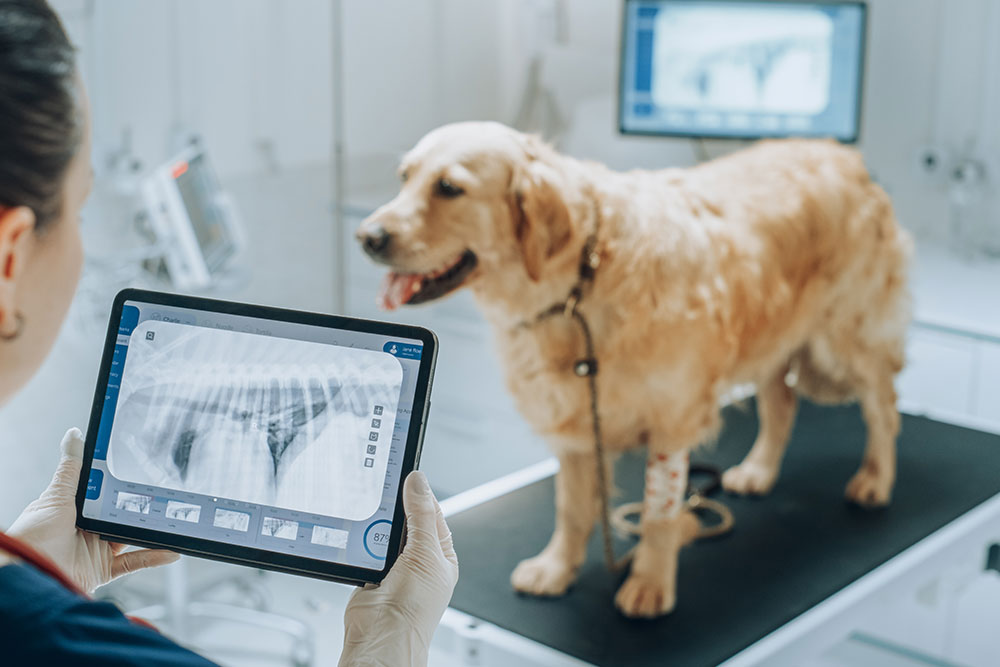
There’s something reassuring about bringing a senior pet in for a check-up and having the vet say everything looks great. But “looks great” means different things depending on whether the assessment involved a thorough physical exam plus a targeted senior panel, or just a general once-over. The value of senior screening lies in the specificity: blood pressure measurement in cats who often develop hypertension after age 10, thyroid testing for the hypothyroidism so common in older dogs, radiographs that reveal organ changes a physical exam cannot. These aren’t optional extras. They’re how we find what hands and a stethoscope can’t.
Countryside Veterinary Hospital in Toney is a family-oriented practice with separate feline spaces and a team-based approach to senior care. We believe in thorough, never-skip-a-step medicine that catches things early, and we follow up every sick visit with a phone call because we know your peace of mind after the appointment matters too. Our veterinary wellness care includes comprehensive senior screening tailored to each pet’s individual needs. Contact us to schedule your senior pet’s screening today.
Why Does Screening Matter More as Pets Age?
Pets age faster than people. Conditions that take years to become obvious in humans can develop in months in dogs and cats, and twice-yearly visits combined with preventive testing for senior pets become much more valuable than annual visits alone once your pet enters their senior years.
Six months in pet years is roughly equivalent to two human years. A lot can happen in that span. Conditions that were stable a year ago may have shifted, and changes in bloodwork values often appear before any outward symptoms.
Tracking trends over time matters as much as any single result. A single creatinine value at the high end of normal isn’t necessarily concerning, but if it’s been climbing year over year, that’s a meaningful pattern. Without prior baselines, that pattern is invisible. Current senior pet care recommendations emphasize twice-yearly evaluations precisely because catching disease early gives us better outcomes, more treatment options, and meaningful additional time with your pet. Our medical services include consistent recordkeeping so we can compare today’s results to what your pet looked like in healthier years.
What Does a Senior Screening Panel Include?
The screening plan is individualized based on age, breed, history, and what we’re seeing on exam. Not every pet needs every test at every visit, but the components below represent the building blocks of a thorough senior workup.
Complete Blood Count and Chemistry Panel
The CBC and chemistry panel are the foundation of senior screening. The CBC identifies anemia, infection, inflammation, and changes in immune function. Many cancers first show up as subtle CBC abnormalities. The chemistry panel evaluates kidney function (BUN, creatinine), liver function (ALT, ALP, GGT, bilirubin), pancreatic indicators, electrolytes, blood sugar, and protein levels. Disease processes show up here long before clinical signs.
Heartworm and Tick-Borne Disease Screening
Annual screening for heartworm and tick-borne diseases remains important even for senior pets on year-round prevention. Older pets have had more years of potential exposure, and prevention failures or breakthrough infections can occur. Conditions like Lyme disease can also worsen or mimic other age-related issues, so testing helps us untangle what’s actually going on.
The value of bloodwork over time is most apparent in seniors. Each panel becomes more useful when compared to your pet’s individual history. Establishing baseline values during healthy years gives us something concrete to measure against later.
Urinalysis
Urinalysis is essential rather than optional in senior pets. It evaluates what bloodwork cannot:
- Concentration (specific gravity): Dilute urine is often the first sign of kidney disease, sometimes appearing months before bloodwork changes
- Protein: Protein loss into urine indicates kidney disease, infection, or other systemic issues
- Glucose: Diabetes screening
- White and red blood cells: Infections, stones, or tumors
- Crystals: Bladder stone risk
- Casts and sediment: Specific kidney disease patterns
The combination of bloodwork and urinalysis catches more disease than either test alone. A normal creatinine with dilute urine, for example, points toward early kidney disease that bloodwork alone might miss.
Blood Pressure Measurement
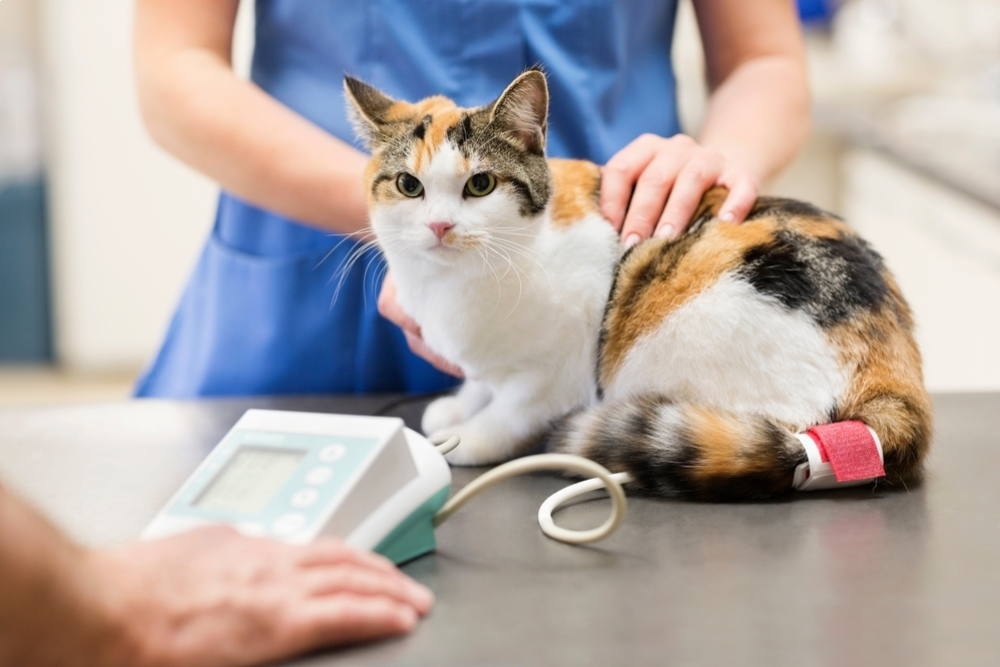
Hypertension in dogs and cats is dramatically underdiagnosed, particularly in cats. It produces no obvious symptoms in most cases, but the long-term damage to kidneys, eyes, brain, and heart accumulates silently. By the time it’s clinically evident, significant harm has been done.
Blood pressure measurement uses a small inflatable cuff (similar to the one used for people) on a paw or tail. The procedure takes a few minutes and is well-tolerated by most pets. We typically take multiple readings to account for stress, since a quiet, calm patient gives more accurate numbers.
Conditions commonly linked to hypertension include chronic kidney disease (the most common cause in senior cats), hyperthyroidism, Cushing’s disease in dogs, diabetes, and heart disease.
The consequences of untreated hypertension include hypertensive retinopathy (which causes retinal detachment and sudden blindness in cats, often as the first visible sign), brain hemorrhage, accelerated kidney damage, and heart muscle changes. Treatment is generally well-tolerated and meaningfully extends quality life when started before damage occurs.
Thyroid Testing
Hypothyroidism in dogs commonly presents in middle to senior years with signs that mimic normal aging: weight gain despite the same diet, lethargy, coat changes, skin changes, and cold intolerance. Diagnosis is straightforward with a thyroid panel. Treatment is daily oral supplementation, and the transformation in dogs whose “aging” was actually thyroid disease can be dramatic.
Feline hyperthyroidism is one of the most common diseases in older cats. The early signs (weight loss despite a great appetite, increased thirst, restlessness, vocalization, vomiting or soft stools, unkempt coat) can look like normal aging while the disease quietly damages the heart and kidneys. Treatment options include daily oral medication, prescription diet, radioactive iodine therapy (curative), or surgery. Most cats live normally with proper management when caught early.
Cardiac Screening
The most common cardiac diseases in senior pets vary by species and breed. Small-breed dogs are predisposed to mitral valve disease, where the valve between the left atrium and ventricle thickens and leaks. Large-breed dogs can develop dilated cardiomyopathy, where the heart muscle weakens and dilates. Cats are prone to hypertrophic cardiomyopathy, where the heart muscle thickens.
Components of cardiac diagnostics:
- Stethoscope examination at every visit to detect new murmurs or arrhythmias
- Chest radiographs to assess heart size, shape, and lung fields
- Echocardiogram for detailed evaluation of chambers, valves, and contractility
- NT-proBNP testing as a blood marker that helps identify early cardiac stress
- EKG for arrhythmia evaluation
These tests are noninvasive and well-tolerated. The earlier heart disease is identified, the more effective treatment can be in slowing progression and extending quality life. Our diagnostic capabilities include cardiac ultrasound and radiographs in-house.
Imaging and Cancer Screening
Radiographic imaging (X-rays) provides a quick, broad look at organ silhouettes, heart size, lung fields, the skeleton, bladder stones, and major masses. Abdominal ultrasound provides much more detail of soft tissue structures, including liver and spleen architecture, kidney internal structure, lymph nodes, and abdominal masses. Baseline imaging once your pet enters the senior years is reasonable, especially for breeds at risk of certain cancers.
Cancer screening is increasingly important as pets age, and the tools available have expanded considerably:
- Hemangiosarcoma often involves the spleen, liver, or heart, and certain breeds carry elevated risk. Hemangiosarcoma is more common in German Shepherds and Golden Retrievers, meaning we may recommend extra imaging for them.
- Osteosarcoma is a bone cancer particularly common in large- and giant-breed dogs. The osteosarcoma risk in giant breeds is well documented and affects when we recommend baseline imaging like x-ray.
- Canine lymphoma commonly presents as enlarged lymph nodes, with lymphoma in Golden Retrievers at especially elevated risk- 1 in 8 will develop this cancer. Blood-based lymphoma screening is an emerging tool that can detect lymphoma up to a year before clinical signs appear, opening the door to much earlier intervention.
- Skin masses are especially common in seniors and often found on physical exams. Fine needle aspiration is a practical in-visit tool to test them for cancerous cells. A small needle samples cells from the lump, and the slide is reviewed for findings that point toward whether it’s a benign growth, an inflammatory process, or something needing further workup. Most pets tolerate the procedure with minimal restraint and no sedation.
Kidney Disease Monitoring
Chronic kidney disease in cats is extremely common, and senior dogs are increasingly affected too. Kidneys cannot regenerate, so once function is lost, it does not come back. The kidneys gradually lose function over time, and pets often show no signs until 65 to 75 percent of function is gone.
Serial bloodwork, urinalysis, and blood pressure monitoring together allow us to catch kidney disease at stages where intervention meaningfully extends life. Management includes dietary changes, fluid support, hypertension treatment when present, and ongoing monitoring.
Managing Joint Pain and Mobility in Senior Pets
Arthritis is one of the most common (and most underdiagnosed) conditions in senior pets. Modern treatment options have transformed arthritis care, and most pets respond well to a combination approach:
- Joint supplements for foundational structural support
- Omega fatty acids for anti-inflammatory benefits
- Laser therapy for inflammation reduction and improved mobility
- Librela for dogs and Solensia for cats: monthly injectable monoclonal antibodies that target chronic pain at the molecular level
- NSAIDs for pets like Carprofen and Galliprant for daily pain relief
- Weight management as the most impactful single intervention
We’re happy to chat through the best options for pain management and supplements with you. Just ask our team.
Cognitive and Behavioral Changes in Aging Pets
Cognitive dysfunction syndrome is significantly more common than most families realize, affecting roughly a third of dogs over age 11 and a similar percentage of senior cats. Many of the early signs are easy to dismiss as normal aging:
- Disorientation in familiar spaces (getting “stuck” in corners or staring at walls)
- Sleep cycle changes, including pacing or vocalizing at night
- Decreased interaction with family or new aloofness
- House-training accidents in previously reliable pets
- Anxiety or restlessness that wasn’t present before
- Reduced response to known cues or names
The earlier cognitive support starts, the more effective it tends to be. Management includes nutritional support (diets formulated for cognitive health, omega fatty acids, antioxidants), environmental enrichment (puzzle feeders, predictable routines, accessible resources), and prescription medications when indicated.
Dental Health as Part of Senior Care
Periodontal disease is underrecognized in senior pets and a major source of pain. Bacteria from chronic dental infection enter the bloodstream and contribute to changes in the heart, liver, and kidneys. By the time visible tartar is heavy, significant damage has often happened beneath the gumline.
Dental care for pets at the senior stage involves professional cleanings under anesthesia (with pre-anesthetic bloodwork to ensure safety), full-mouth dental radiographs to identify hidden disease, and home care strategies between cleanings. Our veterinary dental care services follow this comprehensive approach because cutting corners on dental care affects whole-body health.
Signs to watch for include bad breath, difficulty eating or chewing on one side, pawing at the mouth, drooling (especially with blood), visible tartar or red and bleeding gums, and behavior or appetite changes.
Frequently Asked Questions About Senior Pet Screening
When does my pet officially become a senior?
Cats and small-breed dogs are typically considered seniors around age 10 to 11\. Medium-breed dogs around 7 to 8\. Large- and giant-breed dogs as early as 6\. Once your pet enters their senior window, twice-yearly visits with senior screening become more valuable than annual visits alone.
My pet seems healthy. Do they really need senior screening?
Yes. The whole point of screening is to catch disease before clinical signs develop. Many of the conditions we identify in senior screening are entirely silent in their early stages and respond best when caught early.
Are senior screenings expensive?
Senior screening is typically a fraction of what treating advanced disease costs. Catching kidney disease when early rather than at 75 percent function loss, or hyperthyroidism at the first T4 elevation, dramatically reduces lifetime treatment costs and extends quality time.
Can my pet be sedated for X-rays if they’re stressed?
Yes, when needed. Light sedation makes imaging safer and more accurate, and we tailor our approach based on each pet’s temperament and medical needs.
What if my senior pet hates coming to the vet?
Our practice has feline-only waiting and exam rooms specifically because we know how stressful traditional clinics can be for cats. We can also discuss pre-visit medications and Feline-Friendly handling techniques to make visits easier for any anxious pet.
Helping Your Senior Pet Thrive With Proactive Care
Senior years are often the most rewarding part of life with your pet, and they’re also the years where proactive care makes the biggest difference. The conditions we screen for are highly manageable when caught early, and the investment in twice-yearly visits with thoughtful diagnostics is what keeps “looks great” backed by real evidence rather than just an optimistic exam.
Our doctors at Countryside Veterinary Hospital are committed to thorough, never-skip-a-step care for senior pets. Our veterinary care approach treats every patient as part of the family, with the time and attention senior pets deserve. Book an appointment or contact us to schedule your senior pet’s screening. The earlier we look, the more we can do.

Leave A Comment