


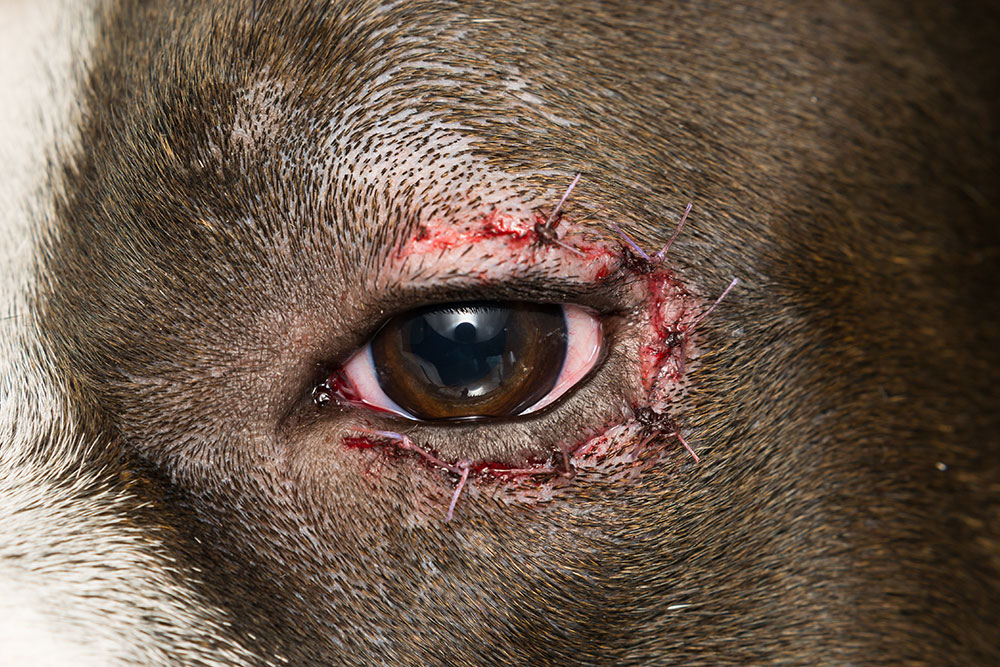
Entropion and Ectropion in Pets: When Eyelid Surgery Is the Best Option
We love the wide range of droopy, squishy, flat, or otherwise unique faces that come with pets of all different sizes, shapes, and mixes- but sometimes, those unique faces come with specific issues. Eyelids that roll inward or droop outward are not just cosmetic concerns; they have real health implications that can permanently affect your pet’s vision.
Entropion, where the eyelid folds toward the eye and causes the lashes to rub constantly against the cornea, is actively painful and can cause corneal scarring, ulceration, and eventual vision loss if left untreated. Ectropion, where the lower lid droops away from the eye, exposes the conjunctiva to chronic irritation and increases susceptibility to infection. Both conditions are common in specific breeds, both are correctable with surgery when performed at the right time, and both have excellent outcomes when the procedure is done well.
At Countryside Veterinary Hospital in Toney, AL, we offer dedicated ophthalmology services as part of a genuinely comprehensive practice, with the surgical expertise and advanced diagnostic capabilities to evaluate and correct eyelid abnormalities with precision. Our advanced care services include the ophthalmic workup needed to assess the degree of abnormality and plan a surgical correction tailored to each individual patient. Chat with our team to have your dog’s or cat’s eye conformation properly evaluated.
Something Looks Wrong with My Pet’s Eyes: What Are Entropion and Ectropion?
The first sign is often subtle: a dog who squints a little more than usual, excessive tearing down the face, frequent pawing at one eye, or noticeable redness when you look closely at the inner corner. Sometimes owners notice the eyelid itself looks off but aren’t sure what they’re seeing. If any of that sounds familiar, it’s worth taking seriously, because both entropion and ectropion are sources of real, ongoing discomfort.
Entropion in dogs is a condition where one or both eyelids roll inward toward the eye. With every blink, the fur or lashes on the lid’s outer surface make contact with the cornea, the clear front surface of the eye. That constant friction produces irritation that ranges from low-grade to genuinely significant, and over time it causes real damage.
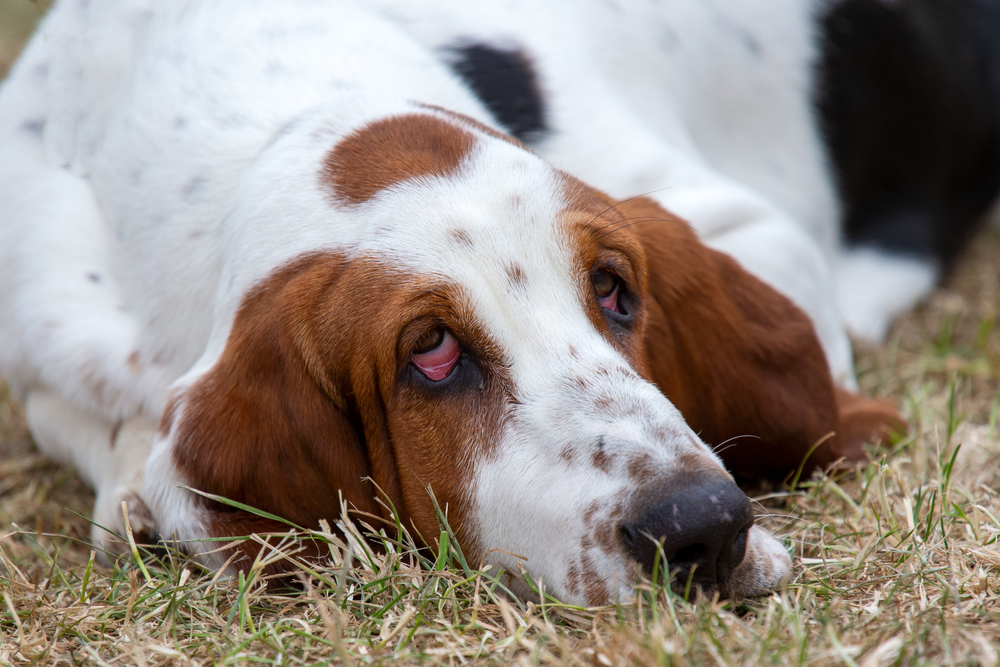
Ectropion is essentially the opposite: the lower lid sags outward, exposing the delicate pink inner tissue of the eyelid. That exposed tissue dries out, collects debris, and becomes a reliable route for bacteria to cause recurrent infections.
Both problems are common eye conditions that veterinarians see regularly, particularly in certain breeds. A proper evaluation considers eyelid position, tear production, corneal health, and lash orientation before a treatment plan is made. We have the ophthalmology expertise and diagnostic equipment to evaluate these cases thoroughly. Request an appointment if you’re noticing changes in how your pet’s eyes look, or want to dig deeper into why chronic eye problems might be occurring.
Which Breeds Are Most at Risk for Eyelid Problems?
Genetics and facial structure drive the majority of entropion and ectropion cases. Eyelid disorders in dogs and cats are disproportionately common in breeds with distinctive facial conformations, and hereditary eyelid conditions are well-documented in many popular breeds.
Breeds most commonly affected by entropion (inward rolling lids):
- Shar Peis and Chow Chows, where excess facial skin creates significant lid tension
- English Bulldogs, Rottweilers, and Mastiffs
- Great Danes and Saint Bernards in the giant breed category
- Brachycephalic dogs like Pugs and Bulldogs often develop entropion in the inner corners of their eyes
- In cats, flat-faced breeds like Persians and Himalayans are most frequently affected
Breeds most commonly affected by ectropion (outward drooping lids):
- Bloodhounds and Basset Hounds, whose naturally loose lower lids leave the eye chronically exposed
- Cocker Spaniels, Newfoundlands, and Saint Bernards
- Great Danes, who are interestingly at risk for both conditions
Some breeds can develop entropion and ectropion simultaneously in different parts of the same eyelid. Age-related tissue loosening, chronic eye inflammation, previous injury, and pain-induced squinting can also produce eyelid changes that look structural but aren’t. A thorough exam helps distinguish these from true congenital or hereditary cases. If you have a breed that’s prone to eye issues, it’s something we’ll discuss at wellness visits so you know what to watch for as your pet gets older.
Warning Signs: When Do You Call the Vet?
Any of the following signs warrant a veterinary evaluation sooner rather than later:
- Excessive tearing or watery discharge running down the face
- Squinting or keeping one eye partially or fully closed
- Visible redness of the white of the eye or inner eyelid tissue
- Pawing or rubbing at the face
- Corneal cloudiness, a gray or bluish haze over the normally clear eye surface
- Crusting around the eye, recurrent infections, or persistent mucus discharge
- Visible inward rolling or outward drooping of the eyelid
These are signs of eye pain that should not be dismissed as normal for the breed or treated as a cosmetic issue. A dog who squints, tears, or rubs at their eye is telling you something hurts. Schedule an evaluation so we can take a close look before secondary damage develops.
What Happens If Eyelid Problems Go Untreated?
The complications of untreated entropion and ectropion are serious and escalate over time.
For entropion, the constant friction of lashes or hair against the cornea leads to corneal ulcers, which are painful open sores on the eye surface. Ulcers can become infected, deepen, and in severe cases lead to rupture or permanent scarring that dims or obscures vision. Chronic irritation also causes pigment to deposit on the cornea over time, reducing transparency and visual clarity even after the underlying problem is corrected.
For ectropion, the exposed lower lid becomes a collection point for dust, debris, and bacteria. Chronic conjunctivitis, persistent eye discharge, and recurrent infections are the typical result. The longer either condition goes unaddressed, the more complex treatment becomes and the less likely pre-existing damage will fully resolve. Reach out to us promptly when you notice eye changes, and we’ll get your pet in quickly.
How Are These Conditions Diagnosed?
The diagnostic process for eyelid abnormalities goes well beyond glancing at the eyelid in a lit exam room. Standard ocular tests used in veterinary ophthalmology provide objective measurements of tear production and corneal health that guide the treatment plan. A proper evaluation at Countryside includes:
- Visual inspection of lid position and lashes before and after applying topical anesthetic. Numbing drops help distinguish true structural entropion from functional entropion caused by pain-induced squinting, since the spasm relaxes when the eye is no longer hurting.
- Tear production testing using a small paper strip placed briefly at the inner corner of the eye. Tear quantity matters because low tear production can both mimic and worsen eyelid disease.
- Corneal staining with a fluorescent dye that highlights any ulcers or scratches on the eye surface.
- Magnified lash and lid examination to identify specific eyelash problems like trichiasis (lashes growing in an abnormal direction) or distichiasis (an extra row of lashes) that can produce entropion-like symptoms without actual lid rolling.
Our advanced care services include the diagnostic tools and expertise to evaluate each of these components accurately.
Treatment Options: From Temporary Fixes to Permanent Correction
Is Surgery Always Necessary Right Away?
Not always, and the right timing depends on your pet. For puppies whose facial structure is still changing, immediate permanent surgery can lead to overcorrection as the face continues to develop. In these cases, temporary eyelid tacking offers an interim solution. Small sutures hold the eyelid in a more normal position, protecting the cornea from ongoing friction while the face matures. Tacking can be repeated as needed, and definitive surgery is scheduled once anatomy has stabilized, usually after the pet is done growing.
Temporary measures may also be appropriate when pain-induced squinting is driving the apparent lid abnormality rather than true structural change. Resolving the underlying pain source often resolves the eyelid position too. We’ll walk through the timing question carefully with you before recommending a path forward, because getting this right for your individual pet matters more than rushing to a procedure.
Permanent Surgical Repair
When the eyelid abnormality is clearly structural and the pet is done growing, definitive surgical correction offers a lasting resolution. The specific technique varies based on whether the condition is entropion or ectropion, which portion of the eyelid is affected, the severity of the malposition, and the individual patient’s anatomy.
Eyelid surgery in veterinary medicine requires precision and a conservative approach. Removing too little tissue leaves the problem incompletely corrected; removing too much overcorrects in the opposite direction. The preferred strategy is to err on the side of conservative correction and revisit if needed, rather than overcorrect in a single procedure. We bring that same thorough, individualized approach to eyelid procedures that guides every surgical case we take on.
Eyelid Conditions in Cats: A Different Picture
Cats don’t follow the same script as dogs when it comes to eyelid problems. Entropion in cats tends to develop later in life rather than being present from birth, and it frequently appears alongside other eye surface conditions rather than in isolation. Feline cases often require a combination of surgical techniques tailored to the specific presentation, and the relationship between entropion and the underlying eye disease needs to be addressed together for the best outcome.
For cats at Countryside, our feline-friendly facilities mean the entire evaluation and treatment experience is designed with their comfort and specific needs in mind. Cat owners with questions about their pet’s eyes are always welcome to reach out to us directly.
What Does the Surgical Day Actually Look Like?
It’s completely normal to feel a little anxious handing your pet off for surgery, so here’s what actually happens. The anesthetic protocol is customized to your pet’s size, age, breed, and health, and pain management begins before the procedure starts. The surgery itself involves precise measurements, careful tissue removal or repositioning, and fine suturing to achieve the corrected lid position, with a dedicated team member monitoring vitals continuously throughout.
Most pets go home the same day once fully awake and stable, with post-operative medications and written instructions. We keep owners informed throughout the process and are available for questions before and after the procedure.
Recovery at Home: Week by Week
The First Few Days
The immediate post-operative period involves some swelling and bruising around the eyelid, which typically peaks around 24-48 hours before beginning to improve. A small amount of clear or slightly pink discharge is normal. Most pets are quieter than usual while pain medication is on board, which is actually a good thing.
Signs that warrant a call to us:
- Rapidly worsening or spreading swelling
- Thick yellow or green discharge from the eye
- Visible bleeding at the incision line
- Sutures that appear loose, pulled out, or an incision that looks open
The most critical piece of home recovery is keeping the cone on. The Elizabethan collar is not optional. Eyelid sutures are small, delicate, and easily disturbed by one enthusiastic paw. Tips on administering eye medications can make the post-operative medication routine significantly less stressful. Having a helper to gently hold the pet while you apply drops or ointment, and following up immediately with a treat, helps most pets adjust quickly. Contact us any time you have concerns during recovery.
The Healing Timeline
- Days 1-3: Swelling and bruising peak, then begin to improve
- Days 10-14: Sutures are typically removed at a scheduled recheck. The eyelid appearance at this point will look close to the final result, though some residual swelling may still be present
- Weeks 3-6: Final lid position settles as all swelling resolves, and the full outcome of the procedure becomes apparent
- If revision is needed: Minor adjustments are occasionally recommended after initial healing. This is a normal part of the process, not a failure of the original surgery
We’ll monitor eye health at each follow-up visit to confirm ongoing comfort and proper healing.
What Kind of Outcomes Can You Expect?
Eyelid surgery has an excellent track record when performed by an experienced surgical team on well-evaluated patients. The most meaningful outcome for most owners is actually the most obvious one: the squinting stops, the constant tearing settles down, and the pet stops rubbing at their face. Watching a dog who’s been uncomfortable for months finally relax and open their eyes fully is genuinely rewarding to see.
Factors that influence the final result include how severe the lid malposition was before surgery, the degree of corneal damage already present, the pet’s age and facial maturity, and consistent cone use and medication compliance during recovery. Pre-existing corneal scarring or pigmentation may not fully resolve even with a successful outcome, but surgery reliably stops ongoing damage and eliminates the source of pain.
A note for owners of show dogs: some breed registries have specific rules regarding surgical corrections and show eligibility. We’re happy to discuss these considerations as part of your consultation so there are no surprises down the road.
FAQ: Entropion and Ectropion in Dogs and Cats
Can entropion or ectropion resolve on its own?
True structural entropion and ectropion do not self-correct. In puppies, some cases appear to improve as the face grows and proportions change, but this is not reliable, and delaying evaluation means the cornea continues to be irritated in the meantime. A veterinary exam is always the right first step.
My dog has been squinting for weeks. Is it definitely entropion?
Not necessarily. Several conditions cause squinting, including corneal ulcers, foreign material under the lid, dry eye, and glaucoma. The only way to know what’s driving the signs is a proper exam. Assuming it’s structural without evaluating risks missing something else that needs different treatment.
Is there any way to prevent entropion in predisposed breeds?
Breeding practices are the primary lever for reducing hereditary eyelid conditions over generations. For individual owners, the most useful steps are scheduling regular eye checks starting in puppyhood for at-risk breeds and seeking evaluation promptly when early signs appear, before secondary damage develops.
Ready to Get Your Pet’s Eyes Evaluated?
Entropion and ectropion are manageable conditions with consistently good outcomes when addressed at the right time by an experienced team. If your dog or cat is squinting, tearing excessively, or showing any of the signs discussed above, the most important next step is getting a proper evaluation before the situation progresses.
We practice uncommonly exceptional veterinary medicine at Countryside, and that standard extends to every eye exam, every surgical consultation, and every follow-up recheck. Request an appointment today to start the journey toward more comfortable vision.

Leave A Comment